We’re living through a period where progress in science, medicine, and artificial intelligence is accelerating faster than ever. The question isn’t whether breakthroughs will happen. It’s whether we’re building the systems to turn them into better care, into higher quality of life — and doing it fast enough.
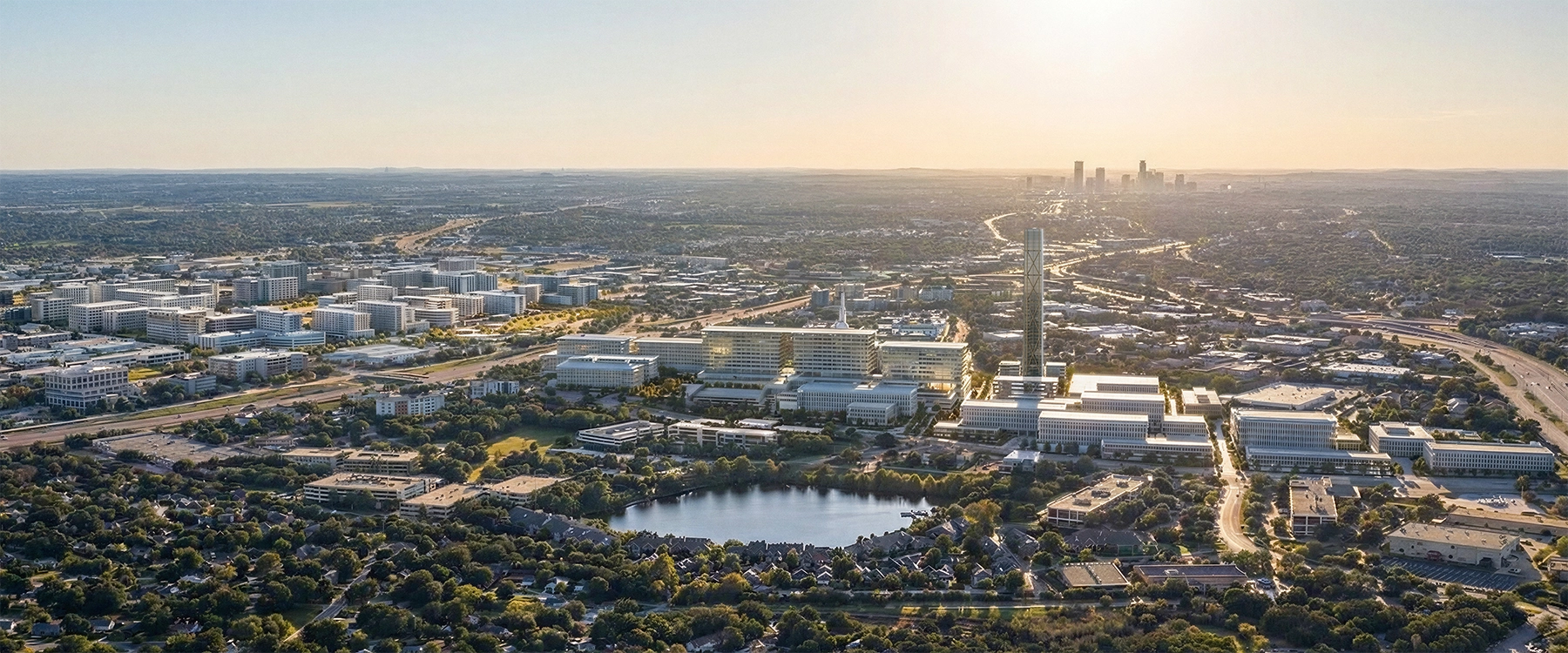
That’s why we’re making a new commitment to the University of Texas at Austin — helping launch the Dell Campus for Advanced Research and the new UT Dell Medical Center. We’re also accelerating our investments in supercomputing, undergraduate scholarships, and student housing at UT, all with the goal of catalyzing the innovation that comes from combining world-class talent with world-class technology and research capacity.
With this investment, our lifetime giving to UT now exceeds $1 billion, reflecting our confidence in what’s possible here, and in UT’s role at the center of a defining moment for health, research, and innovation.
Central to this vision is a collaboration with The University of Texas MD Anderson Cancer Center, which will be integrated into the UT Dell Medical Center to deliver world-class cancer care as part of a unified, patient-centered system. This will provide access to leading cancer expertise within a coordinated care journey, where specialists, advanced therapies, and clinical research are connected from the outset to improve outcomes and experience.
Built from the ground up, this brings together deep research and advanced computing with thoughtful patient care in a more connected system. When those pieces work together, progress can move faster — from discovery to real-world impact — helping enable earlier detection and more personalized treatment, leading to better outcomes while improving how care is delivered over time.
For both of us, health and medicine has always been personal, shaped by early experiences that defined what good care looks like — and why reaching people sooner matters.
It also starts with students. For years, we’ve seen what happens when students are given the opportunity to step into their potential. They go on to become the physicians, scientists, and innovators who move this work forward. Expanding that access through scholarships — especially for students across Texas — is an important part of what we’re building.
UT Austin has always been a place where ideas begin and grow. A place where ideas can start in a dorm room — like Dell Technologies, a small enterprise that became a global company and played a big role in shaping Austin into a technology center. What made that possible was the combination of talent, research, and an environment willing to build.
What’s already happening at Dell Medical School points to what’s possible. More people in Austin are getting care closer to home. Clinicians and researchers are choosing to build their most innovative work here. And a more connected, patient-centered approach is improving experiences and life outcomes. This next chapter builds on that foundation.
It’s also an opportunity for Texas. When research and talent come together — along with the ambition to build — they don’t just improve care, they drive economic growth, create jobs, and open new pathways for people. We’ve seen that model transform Austin’s technology ecosystem, and we’re excited to help create that same wave in life sciences.
We’ve always believed that long-term thinking is a competitive advantage — and that the best way to predict the future is to help build it. This is a moment to do exactly that. By investing in people, infrastructure, and institutions that can connect ideas to impact, we have an opportunity to make progress faster — and reach more people because of it.
We’re excited about what this can make possible for the people of Austin and Texas and beyond — and for the generations that follow.

Michael and Susan Dell